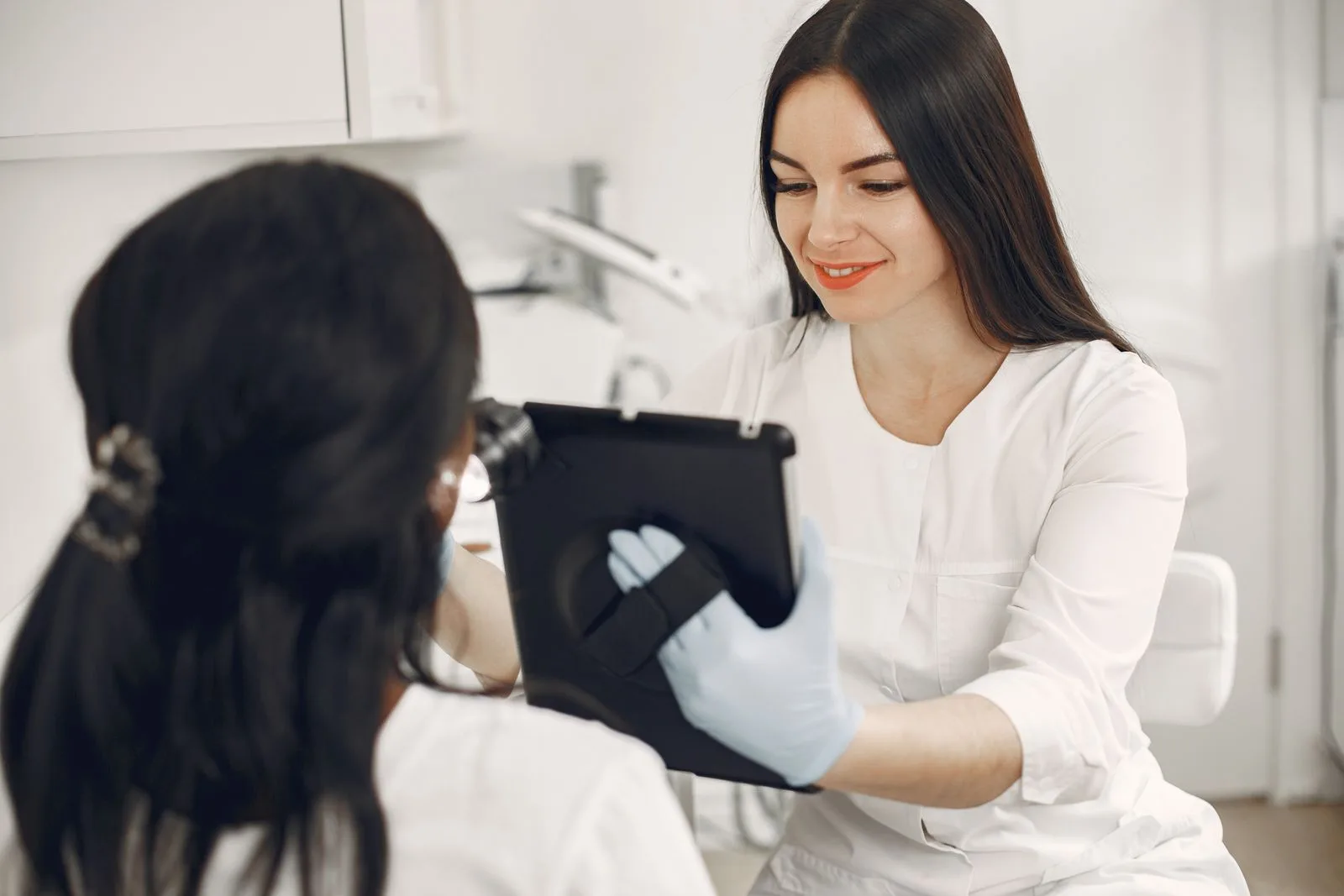
What happens at a skin check

You change into a gown. Dr. Ashdown or Caio Barros, PA-C, checks your skin from scalp to soles, including your back, behind your ears and between your toes.
A dermatoscope, a lighted magnifier, gives a close look at any mole that stands out. We photograph the moles we want to watch, so next year's check compares the same spot.
Spots to show us between visits

Call us about a spot with any of the warning signs dermatologists call the ABCDEs:
- Asymmetry: one half does not match the other.
- Border: the edge is ragged, notched or blurred.
- Color: more than one color, or an uneven color.
- Diameter: often larger than a pencil eraser (about 6 mm), but melanoma can be smaller.
- Evolving: it changes in size, shape or color.
Also call about a sore that does not heal, or a spot that bleeds, itches or hurts.
Biopsies, results and treatment

If a spot needs a closer look, we numb the skin and take a small sample the same day. A laboratory examines it, and a provider calls you with the result.
We remove many skin cancers in the office. When Mohs surgery is the better choice, we refer you to a Mohs surgeon and send your records ahead.
Questions about skin cancer screening and mole checks
How often should I have a skin check?
It depends on your history. Dr. Ashdown suggests a schedule at your first visit. People who have had a skin cancer, or who have many moles, usually come more often.
Does insurance cover a skin check?
Insurance often covers a skin check when you have a spot of concern or a history of skin cancer. Some plans, including Original Medicare, do not cover a routine screening check when you have no symptoms. Call us with your plan and we will check before you come in.
Medically reviewed by Dr. Imogen Ashdown, MD, FAAD, October 7, 2026